
Cold‑pressed from Ricinus communis seeds, castor oil is a pale‑gold botanical carrier oil with a long‑standing heritage in traditional beauty practices, tracing back to ancient Egyptian skincare routines. What sets it apart from most plant‑derived oils is its distinct fatty‑acid composition: roughly 90 % of its content is ricinoleic acid, a unique monounsaturated 18‑carbon fatty acid carrying a hydroxyl functional group. This molecular feature creates its characteristic high viscosity and strong skin‑affinity properties. Besides ricinoleic acid, it delivers vitamin E, plant‑based proteins, minerals and essential fatty acids. Within cosmetic formulations, it performs multiple roles working as an emollient, occlusive barrier‑former and skin‑conditioning raw material.
It is critical to clarify that castor oil belongs to carrier fixed oils rather than essential oils. It will not disperse within water‑based solutions. Its heavy, viscous consistency makes it entirely unsuitable for aroma diffuser devices. It bears only a faint, subtle seed‑derived aroma without complex floral or spicy fragrance notes. Recognising this core distinction helps formulators make correct decisions for product development.
Massage Applications: Controlled Grip & Targeted Comfort
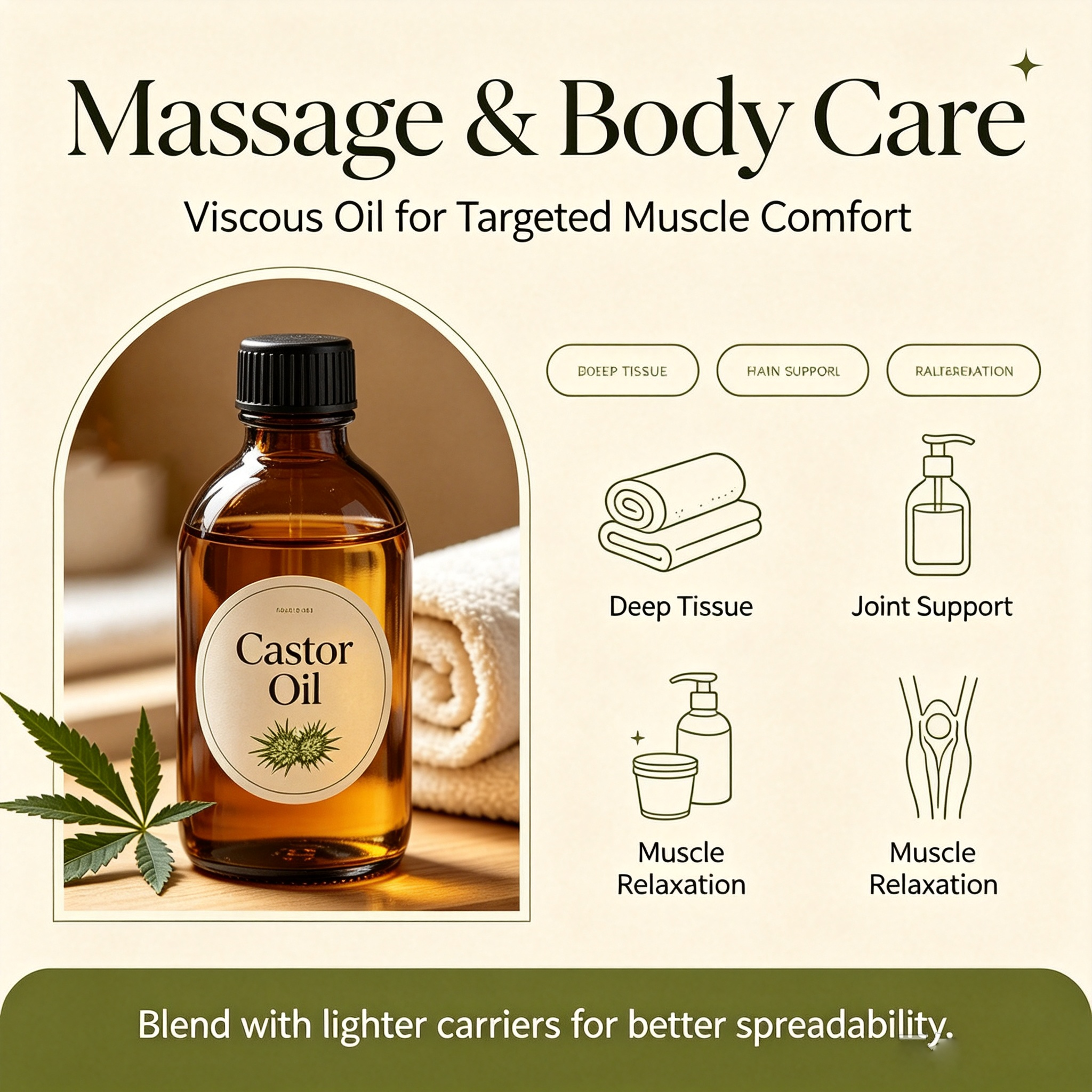
Its signature high viscosity brings both merits and practical limitations in massage therapy. The thick texture enables strong surface grip, which proves highly valuable for deep‑tissue and sports massage work. Therapists gain stable contact over muscle tissue and fascia instead of overly slippery glide. Thanks to inherent anti‑inflammatory activity, castor oil serves well in blends intended for stiff joints, aching muscles and inflammatory discomfort; it can be applied locally onto shoulders, knees and lower‑back regions.
For Swedish‑style gentle relaxation massage, neat castor oil tends to feel overly dense and tacky on skin. Industry best practice suggests blending it at a 1:1 ratio alongside lighter carrier oils such as sweet almond oil or jojoba oil. This formula retains part of its therapeutic richness while significantly improving spread‑ability and skin absorption. Practitioners may warm the mixed oil between palms before body application. Castor oil packs, where absorbent flannel fabric is saturated with oil and placed on target body areas for 30 minutes or longer, represent a well‑known complementary traditional technique alongside massage treatments.
Skincare: Barrier‑Locking Occlusion with Formulation Precautions
In cosmetic skincare formulas, castor oil mainly functions as an occlusive moisturiser and emollient ingredient. Upon skin contact, it forms a thin protective film that slows transepidermal water loss and locks in hydration. This quality makes it ideal for extremely dry, rough and calloused skin zones such as elbows, heels and knee areas. Ricinoleic acid supplies mild anti‑inflammatory benefits, and lab tests have noted its antimicrobial potential, sparking formulation interest for blemish‑prone product lines.
Even so, formulators need to observe an important caveat. For many skin types, castor oil registers as comedogenic. Left undiluted overnight on facial skin, it may block pores and aggravate acne concerns rather than improving skin condition. Dermatological recommendations advise oily and acne‑prone complexions to avoid prolonged neat facial application. Better outcomes come from mixing it with lighter carrier oils or layering it above lightweight moisturisers. For dry‑skin users, a thin final‑step overnight layer supports moisture‑locking “slugging” routines.
Castor oil also shines in oil‑cleansing concepts, acting as the high‑grip cleansing component mixed with lighter plant oils to dissolve sunscreen, cosmetic makeup and surface sebum. A common starting proportion is 30 % castor oil combined with 70 % complementary carrier oil. Formulators can raise castor‑oil share for oil‑rich skin profiles, while reducing its percentage for dry‑skin‑targeted products.
Aromatherapy Use: Dilution Carrier, Not Diffuser Material
Castor oil cannot be utilised for direct diffuser aromatherapy. Its dense molecular weight prevents effective volatilisation into ambient air. Pouring this thick carrier oil into ultrasonic diffusers yields zero aromatic effect and may even damage diffuser hardware.
Its true aromatherapy value lies as a topical‑use carrier medium. Essential oils get blended into castor oil for massage treatments and therapeutic roll‑on preparations. Standard dilution guidance applies here: mixing 3‑6 drops of essential oil per 20 mL of castor oil delivers a 1‑1.5 % dilution rate, safe for sensitive‑skin zones and initial product trials. A dosage of 4‑6 drops within 20 mL works well for general‑purpose massage blends. Owing to its heavy consistency, many formulators prefer pre‑blending castor oil with lighter‑bodied carrier oils prior to introducing essential‑oil components. This guarantees uniform dispersion and smoother application. Its mild neutral scent will not compete against essential‑oil aroma profiles, making it a neutral blending base for joint‑support massage, scalp‑care formulas and localised skin‑treatment products.
Post time: Nov-10-2026