
Jiangxi Baicao pharmaceutical Co.,Ltd
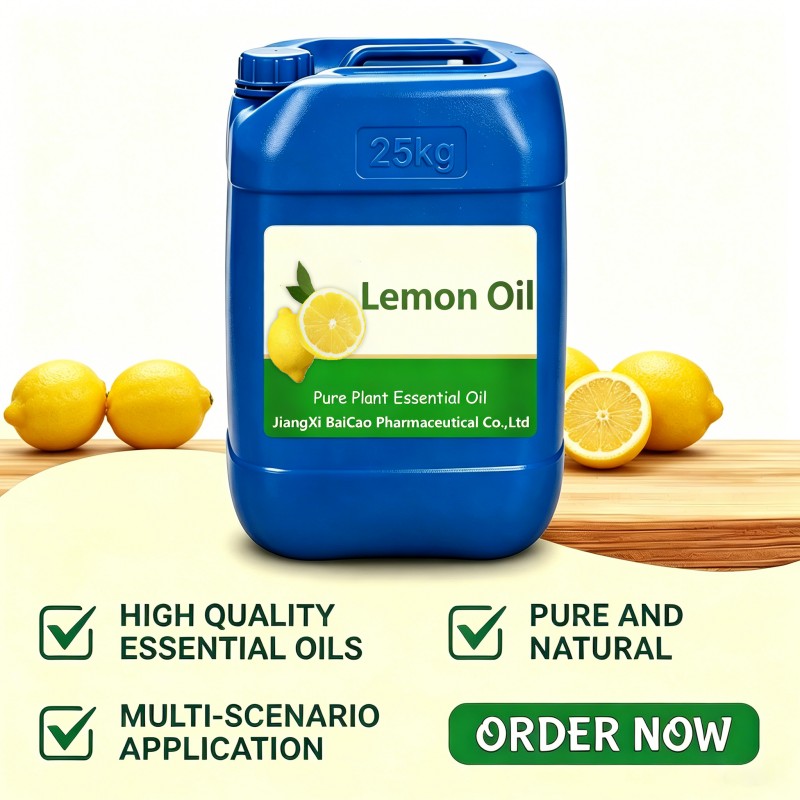
Extracted mechanically from fresh lemon rind, cold‑pressed lemon oil serves as a versatile botanical raw material widely adopted in aromatherapy formulations, personal‑care manufacturing, cosmetic development and diverse household‑grade applications.
1. Aromatherapy & Ambient Scenting Applications
Place 2‑3 drops within your diffuser to fill indoor spaces with uplifting citrus notes, easing mental exhaustion and lifting overall emotional state. For mental clarity during intensive work or study sessions, direct inhalation can help clear mental fog and sharpen alertness. It may also help soothe mild discomforts linked to motion sickness or transient queasy feelings. The bright, invigorating scent builds pleasant, energizing surroundings for offices, living areas and commercial spaces alike. For custom aroma blends, it pairs harmoniously with peppermint, rosemary, lavender and eucalyptus essential oils.
2. Topical Formulation Uses (Must Pre‑Mix With Carrier Oil Base)
Important note: This cold‑expressed citrus oil carries phototoxic properties; all skin‑contact applications are recommended for nighttime routines exclusively.
In skincare creation: It assists in regulating excess sebum output, refining enlarged pores and mitigating dull, uneven complexion as well as minor blemish marks. Always incorporate carrier oil before any skin contact. Within massage formulations: Blended into base oils, it helps relieve stiff, tight muscles while supporting peripheral blood circulation. DIY beauty production: Small dosages can be incorporated into body lotions and hair‑washing formulas to deliver fresh citrus aroma while helping control surface oiliness.
Critical Safety Reminder for Topical Usage: Cold‑pressed lemon peel oil contains naturally‑occurring furanocoumarins. Do not treat skin with this oil if UV or direct sun exposure will occur within the subsequent 12‑hour window. Failure to observe this rule may trigger skin burning risks and unwanted pigmentation shifts.
3. Household Formulation & DIY Practical Scenarios
Multi‑purpose surface cleaner: Combine with purified water and vinegar inside spray bottles for sanitizing countertops, sinks, glass panels and food‑contact cutting boards. Adhesive residue elimination: Effective for dissolving sticker remnants, tape leftover marks and accumulated kitchen grease layers. Wood‑surface conditioning: Formulate together with carrier oils to cleanse and bring gentle gloss to wooden furniture surfaces. Odor neutralizer: Mitigate stale cooking fumes, pet‑related odors and musty indoor air; a tiny amount may also be added to laundry cycles for natural citrus freshness. Light metal maintenance: Suitable for gentle tarnish removal on silver‑based metal articles.
4. Industrial & Other Commercial‑Grade Deployments
Functions as a premium aromatic raw ingredient for candle crafting, handmade soap production, perfume compounding and varied cosmetic stock formulations. For food‑flavoring purposes, only food‑compliant batches can be applied, and addition levels must strictly comply with regional food‑safety dosage standards.
General Safety Guidelines
Never apply undiluted neat essential oil straight onto bare skin. Maintain distance from eye tissues, mucosal membranes, domestic pets and young children. Any internal consumption should only proceed with professional aromatherapist or qualified practitioner oversight.
Post time: Oct-12-2026