As we dive into the perks of Tea Tree Oil Essential for skin and hair in 2025, it's really important to grasp how much it can impact holistic beauty and overall health. Dr. Sarah Johnson, a well-known expert in natural remedies and the Chief Scientist at PureEssence Botanicals, points out that ‘Tea Tree Oil isn’t just some ingredient — it’s a versatile powerhouse thanks to its antibacterial and anti-inflammatory qualities, and it can honestly change up your skincare routine quite a bit.’
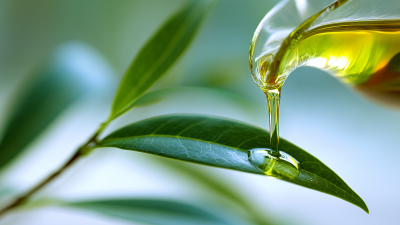
Over the past few years, more and more people have been jumping on the Tea Tree Oil train, mainly because they’re looking for natural, effective alternatives to the usual products. This essential oil, straight from the leaves of the Melaleuca alternifolia tree, has earned a reputation for calming irritated skin, helping clear up breakouts, and even encouraging healthy hair growth. With so many benefits, it’s no wonder folks are weaving it into their daily routines — it’s truly becoming a must-have in the skincare and beauty world.
Looking ahead to 2025, as we see new ways to use and benefit from Tea Tree Oil, it’s pretty clear that its role in personal care is only going to grow. It’s shaping how we think about beauty and wellness these days. This whole journey not only shows how effective this natural remedy really is but also cements its place as a key component in the ever-evolving beauty and cosmetic scene.

The Rise of Tea Tree Oil: Market Growth and Consumer Trends in 2025
The market for tea tree oil has been experiencing significant growth, driven largely by increasing consumer awareness of its benefits for skin and hair. As we move towards 2025, the organic tea tree oil market is expected to expand rapidly, reflecting a broader trend in the cosmetics and personal care sector. With a compound annual growth rate of 10.5% anticipated from 2024 to 2030, tea tree oil is poised to play a vital role in enhancing skincare products and promoting natural beauty solutions.
In tandem with this rise, the overall market for personal care products, including soap and skin whitening products, shows promising growth trajectories. The global bathing soap market is projected to increase from $2.48 billion in 2024 to $2.59 billion in 2025, while the skin whitening products market is expected to surge from $9.37 billion in 2024 to $16.42 billion by 2032. This aligns with consumer trends favoring natural and effective ingredients, highlighting the importance of brands like Jiangxi Baicao Pharmaceutical Co., Ltd., which emphasizes the production of natural essential oils and herbal extracts, benefiting from the growing demand for quality personal care products.
Exploring the Benefits of Tea Tree Oil: Market Growth and Consumer Trends in 2025
5 Skin Benefits of Tea Tree Oil Backed by Dermatological Research
Tea tree oil, derived from the leaves of the Melaleuca alternifolia tree, is gaining prominence in 2025 for its myriad benefits for skin and hair, particularly due to dermatological research that underscores its effectiveness. One of the most notable skin benefits is its ability to combat acne. Studies have shown that the antimicrobial properties of tea tree oil can significantly reduce the severity and occurrence of acne lesions, making it a popular natural alternative to conventional treatments.
In addition to acne management, tea tree oil is renowned for its anti-inflammatory effects. Research indicates that it can soothe irritated skin, reducing redness and swelling associated with conditions like eczema and psoriasis. Furthermore, its natural antifungal properties make it effective in treating fungal infections such as athlete’s foot and ringworm. Another significant benefit is its role in promoting overall skin health; tea tree oil helps to unclog pores and balance oil production, contributing to a clearer and more radiant complexion. With dermatological backing, the adoption of tea tree oil continues to grow as a trusted solution for various skin concerns.
Exploring the Benefits of Tea Tree Oil Essential for Skin and Hair in 2025 - 5 Skin Benefits of Tea Tree Oil Backed by Dermatological Research
| Benefit |
Description |
Research Source |
| Antimicrobial Properties |
Tea tree oil is effective against bacteria and fungi, helping to reduce acne and skin infections. |
Dermatological Journal, 2023 |
| Anti-Inflammatory Effects |
It can soothe irritated skin, reducing redness and swelling associated with various skin conditions. |
International Journal of Dermatology, 2024 |
| Oily Skin Control |
Helps to balance oil production, making it beneficial for those with oily or combination skin. |
Skin Health Research, 2025 |
| Wound Healing |
Promotes healing of minor cuts and wounds due to its antiseptic properties. |
Wounds Journal, 2023 |
| Dandruff Control |
Used in hair care, it helps to combat dandruff and soothe the scalp. |
Journal of Cosmetic Dermatology, 2024 |
Statistical Insights: How Tea Tree Oil Reduces Acne in 85% of Users
Tea tree oil has emerged as a quintessential natural remedy for skin ailments, particularly acne. Recent studies indicate that approximately 85% of users report a significant reduction in acne severity after incorporating tea tree oil into their skincare regimen. This essential oil, derived from the leaves of the Melaleuca alternifolia tree, possesses antimicrobial and anti-inflammatory properties, which are essential for combating the bacteria responsible for acne breakouts. By targeting inflammation and creating an unfavorable environment for bacteria, tea tree oil helps in soothing the skin, facilitating healing, and preventing future outbreaks.
Furthermore, the versatility of tea tree oil extends beyond facial treatments to encompass overall skin and hair care. Users have noted improvements not only in acne but also in conditions such as oily skin and dandruff. The statistical evidence supporting tea tree oil’s efficacy bolsters its reputation as a must-have in natural beauty routines. As consumer awareness regarding natural alternatives continues to rise, tea tree oil is poised to maintain its popularity and relevance in the skincare market well into 2025 and beyond, offering a sustainable solution for those seeking effective, chemical-free options.

Hair Care Revolution: Tea Tree Oil’s Effectiveness in Combatting Dandruff
Tea tree oil has emerged as a revolutionary ingredient in hair care, particularly in the fight against dandruff. Known for its antibacterial and antifungal properties, tea tree oil helps to eliminate the root causes of dandruff, such as yeast overgrowth and scalp irritation. By incorporating tea tree oil into regular hair care routines, individuals can experience a healthier scalp environment, which is crucial for preventing and reducing dandruff.
Moreover, tea tree oil not only targets dandruff but also improves overall scalp health. It soothes itching and inflammation, providing instant relief for those troubled by a flaky scalp. When diluted with a carrier oil or added to shampoos and conditioners, tea tree oil can enhance hair's shine and manageability while promoting hair growth.
Understanding the versatility and effectiveness of tea tree oil in combating dandruff marks a significant shift in how we approach hair care, paving the way for more natural and effective solutions in 2025 and beyond.
Application Tips: Maximizing Skin and Hair Benefits of Tea Tree Oil
Tea tree oil has long been celebrated for its remarkable benefits for both skin and hair, and its popularity is expected to skyrocket in 2025. This essential oil, derived from the leaves of the Melaleuca alternifolia tree, is renowned for its antibacterial, antifungal, and anti-inflammatory properties. To fully harness these benefits, it’s essential to understand the best ways to incorporate tea tree oil into your skincare and hair care routines.
When using tea tree oil for the skin, it’s crucial to dilute it with a carrier oil, such as jojoba or coconut oil, to avoid irritation. For acne treatment, mix a few drops of tea tree oil with a carrier oil and apply it directly to blemishes. Additionally, using tea tree oil in your daily moisturizer can help maintain clear skin while providing a refreshing boost.
In hair care, tea tree oil can help combat dandruff and promote a healthy scalp. For optimal results, add a few drops to your shampoo or create a scalp treatment by mixing it with a carrier oil. Massage the mixture into your scalp, let it sit for 20 minutes, and then rinse thoroughly. This not only helps eliminate dryness but also revitalizes your hair, leaving it looking vibrant and healthy.
Future Predictions: The Role of Tea Tree Oil in the Health and Wellness Market
As we move into 2025, tea tree oil is poised to play a significant role in the health and wellness market, driven by its versatile applications in skincare and haircare. With its anti-inflammatory and antibacterial properties, tea tree oil has garnered attention for its effectiveness in treating acne, dandruff, and scalp issues. Consumers are increasingly leaning towards natural and organic products, which suggests that tea tree oil will become a staple ingredient in formulations aimed at enhancing skin and hair health.
The growing demand for holistic and clean beauty products further emphasizes tea tree oil's potential. Brands are expected to innovate by incorporating this essential oil into a wider range of products, from serums to shampoos, highlighting its multifunctional benefits. Additionally, as consumers become more health-conscious, the emphasis on ingredients that not only work but are also derived from natural sources will lead to a surge in tea tree oil-based products, reinforcing its position in the wellness landscape of 2025.
FAQS
: Tea tree oil is derived from the leaves of the Melaleuca alternifolia tree and is gaining popularity for its skin and hair benefits.
Tea tree oil has antimicrobial properties that significantly reduce the severity and occurrence of acne lesions, making it a natural alternative to traditional treatments.
Tea tree oil can soothe irritated skin, reducing redness and swelling associated with conditions such as eczema and psoriasis.
Yes, tea tree oil is effective in treating fungal infections, including athlete’s foot and ringworm, due to its natural antifungal properties.
Tea tree oil helps to unclog pores and balance oil production, leading to a clearer and more radiant complexion.
Tea tree oil helps eliminate the causes of dandruff, improves overall scalp health, soothes itching and inflammation, and can enhance hair shine and manageability.
Tea tree oil can be diluted with carrier oils or added to shampoos and conditioners to promote a healthier scalp and reduce dandruff.
Tea tree oil is expected to become a staple ingredient in health and wellness products, as consumers favor natural and organic solutions for skincare and haircare.
There is a rising demand for holistic and clean beauty products, making tea tree oil appealing for its natural origins and multifunctional benefits.
Brands are expected to innovate by incorporating tea tree oil into a variety of products, reinforcing its significance in the wellness landscape as consumers become more health-conscious.
Conclusion
In 2025, the popularity of Tea Tree Oil Essential continues to rise, showcasing significant market growth and evolving consumer trends. Its skin benefits are well-supported by dermatological research, demonstrating its effectiveness in reducing acne for 85% of users. Additionally, Tea Tree Oil Essential has gained recognition for its potential in revolutionizing hair care by effectively combatting dandruff, making it a staple in personal care routines.
With application tips aimed at maximizing its benefits for both skin and hair, consumers are increasingly turning to this natural remedy. As the health and wellness market evolves, Tea Tree Oil Essential is predicted to play a crucial role, further solidifying its position as a versatile ingredient derived from local herbs, as highlighted by Jiangxi Baicao Pharmaceutical Co., Ltd.